
Last Updated on April 11, 2026 by Khabr Bite
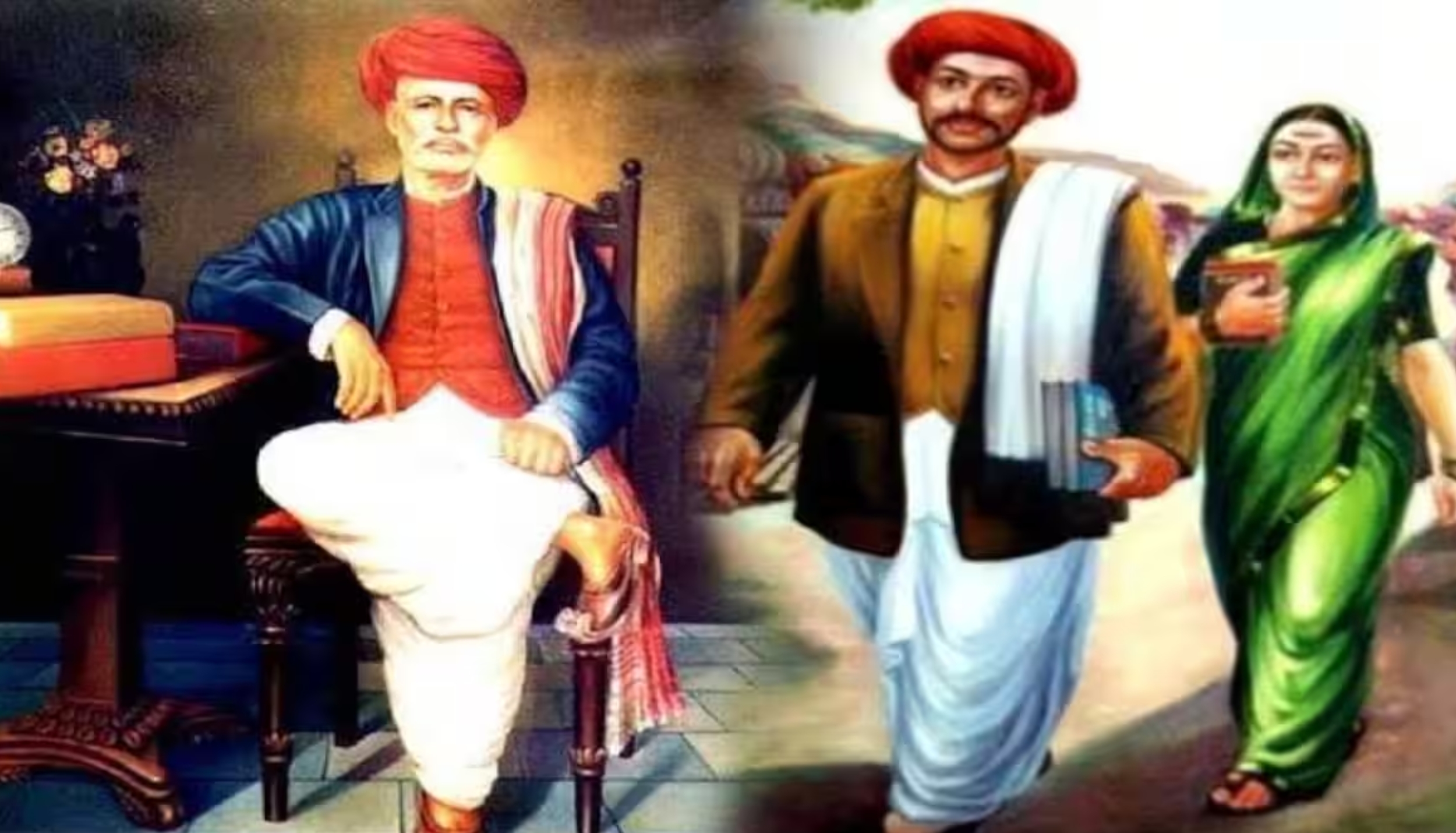
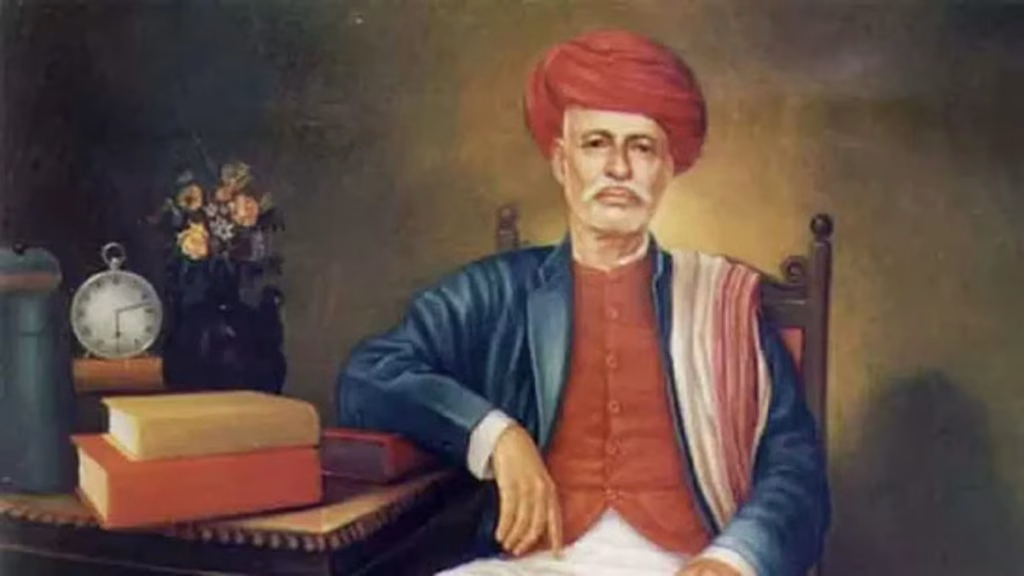
Two hundred years after the birth of Jyotirao Phule, India is assessing its progress regarding the issues he advocated and how far it still needs to walk. Jyotirao Phule is primarily remembered for his pioneering role in women’s education and his scathing attacks against caste hierarchy and was the first to think of laying the groundwork of a more-level society. In 1848, he and Savitribai Phule broke new ground by setting up India’s first girls’ school in Pune, and soon after founded the Satyashodhak Samaj which was aimed at fighting against caste oppression. Phule’s thoughts did not remain confined to him alone as they inspired figures like B. R. Ambedkar, thereby making his legacy a cornerstone of India’s social reform journey.
Also Read: Vaibhav Sooryavanshi Biography 2026: Age Dispute, Family and Coaches and Cricket Success
Then: The Reality in the 1800s
Back in the 19th century, social norms that Phule criticized were so ingrained that they could not be easily dismantled. Access to education for women, especially from lower castes, was extremely limited. The female literacy level of such groups was almost zero as per the social standard norms put a number of girls to marriage at a very early age most of the time the age was between eight and twelve.
The caste system was rigid and deeply embedded in society. Dalits were the most marginalized and excluded from almost all the public places including wells, temples, and schools. Widow remarriage was looked down upon and they were side-lined even by society.
Now: Progress Backed by Data
Today, the Indian socio-legal fabric is almost entirely changed from that in the 19th century. Female literacy has significantly gone up as per the national surveys, it is estimated to be as high as 70 to 72 percent. Apart from the enactment of the Child Marriage Prohibition Act 2006, the Constitution has also abolished the practice of untouchability, which can be found under Article 17, and these are some examples that show that the country has moved further ahead from the past in a big way.
Currently, Dalits are benefitting from reservation in educational institutions and government jobs, besides the legal protection under the SC ST Prevention of Atrocities Act, 1989. The disparities in the data, however, continue to be evident.
Also Read: Bangladesh vs New Zealand Series 2026: Full Squad, Schedule & PSL Players Update
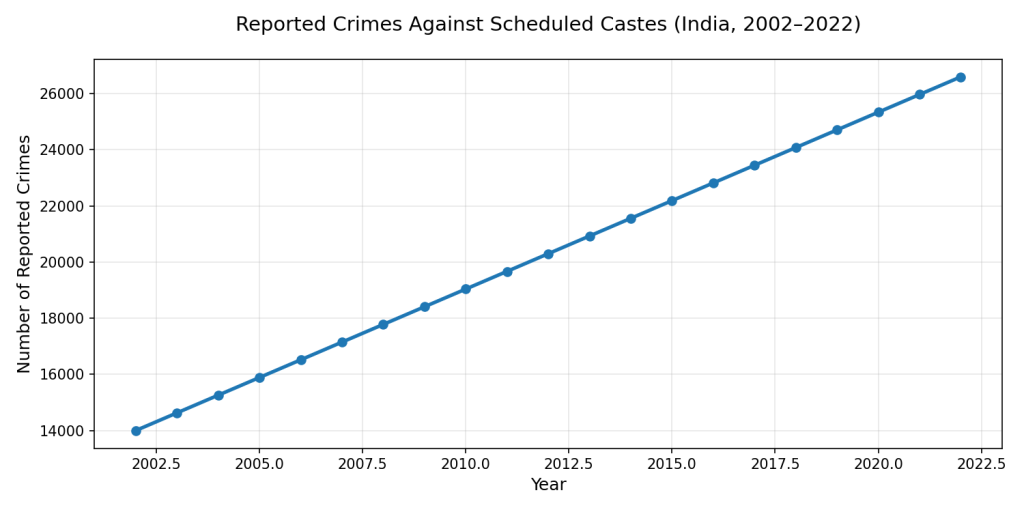
In addition, crime statistics show that the issues are not solved yet. In 2022, almost 57,000 incidents of crimes against Scheduled Castes were reported. The rise in reported cases is partly due to improved reporting. This is indicative of the problems in the functioning of the justice system.
200 Years of Reform Key Milestones
| Year | Key Milestone |
|---|---|
| 1848 | The very first girls’ school was started by Phule and Savitribai in Pune. |
| 1873 | Satyashodhak Samaj came into existence. |
| 1891 | The Age of Consent Act raised the minimum age of marriage to 12 years. |
| 1950 | The Constitution outlawed untouchability through Article 17. |
| 1955 | The Protection of Civil Rights Act made untouchability a criminal offence. |
| 1989 | SC ST Prevention of Atrocities Act came into force. |
| 2006 | The Prohibition of Child Marriage Act set the minimum age 18 for girls. |
| 2009 | The Right to Education Act ensured free schooling for children from 6 to 14 years. |
| 2016 | Amendments to the law gave more teeth to the SC ST Act. |
| 2026 | Government observance of Phule’s 200th birth anniversary with national level events. |
Dalit Violence: The Data Reality
According to The Indian Express, historical data from the Crime in India shows that the number of crimes against Scheduled Castes has gone on a rising trend over the past few decades. Some of them even at a rise of 170% over the 1991-2021 period. This rise is also partly explained by the improvement in the reporting system and increase in the public legal awareness.
- In 2022, approximately 57,000 offenses were registered.
- The percentage of convictions is in the range of only 30 to 35%.
According to specialists, even though the number of reports has increased, the low rate of convictions still indicates the justice delivery system has significant shortcomings.
Ground Reality: What Still Has Not Changed
Even though the law has changed, the difference in structure will always affect everyday life. Dalit control over land is so little that their share is less than even their population percentage, which is evidence of their continuous economic marginalization.
Also Read: Jaecoo J7 Seen in India; JSW Testing New Hybrid SUV for Launch
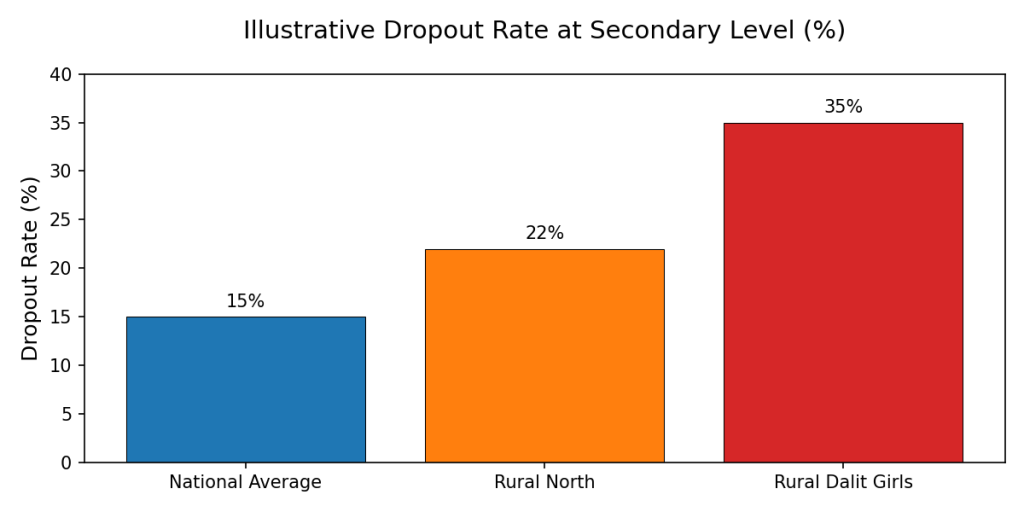
Education-wise, the rate of students dropping out of school remains high at the secondary level, especially among Dalit girls. The social discrimination has not been wiped out yet, either, as there have been instances of segregated practices like using separate utensils in some rural areas reported.
Why Phule’s Ideas Still Matter in 2026?
Official statistics and policy documents indicate that the Indian government has taken steps to deal with several problems highlighted by Phule.
The notion of Phule that caste discrimination, gender inequality, and illiteracy constitute a vicious triangle is as true today as it was then. All the visible inequalities today are the consequences of the same deep-rooted social grievances that he addressed almost two hundred years ago.
As India commemorates the bicentenary of his birth, the issue at hand is not whether Jyotirao Phule was correct or not. The facts, indeed, point to him being right. The issue, indeed, is whether the nation is willing to bring about the societal change he dreamed of.
Reactions on Phule’s 200th Anniversary
Many politicians across different parties commemorated Jyotirao Phule on his 200th birthday by honoring the significant socio-cultural changes he brought about in India.
Also Read: CSK vs DC Preview: Can CSK Bounce Back Against Confident Delhi Capitals?
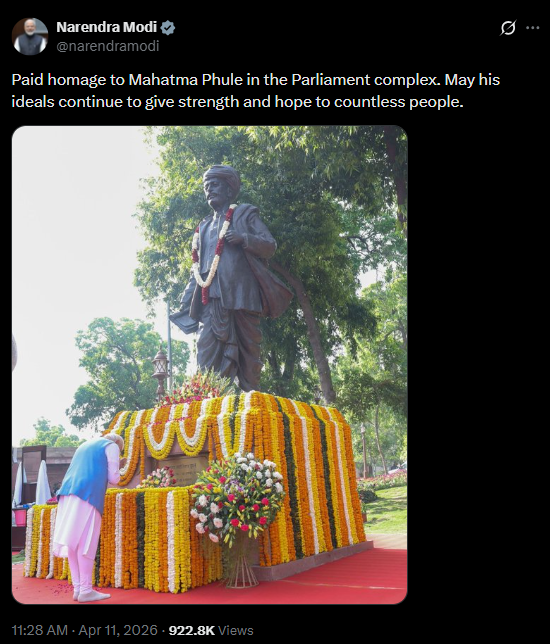
Prime Minister Narendra Modi, through his X account, acknowledged the role of Phule in pioneering social reform and education:
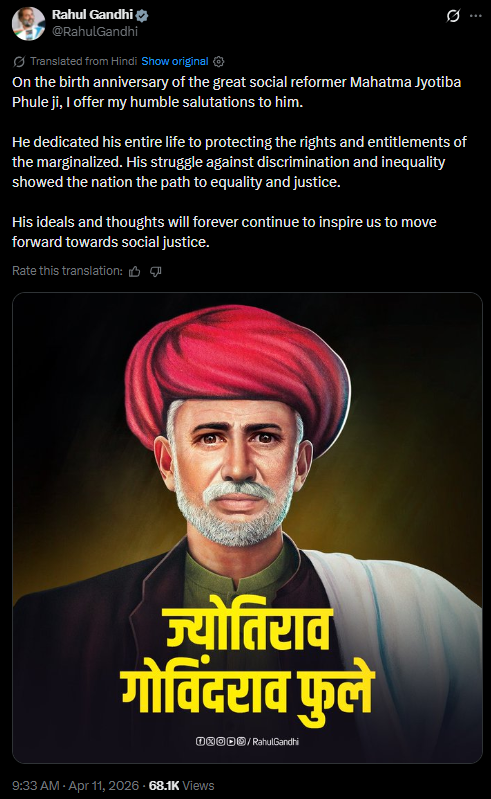
Congress leader Rahul Gandhi also acknowledged his efforts and highlighted his campaign for the eradication of casteism and other forms of inequalities: