

Last Updated on May 6, 2026 by Naveen Saini
Imagine you are sitting at home scrolling Instagram or watching YouTube and suddenly your phone begins making a loud, unusual alarm sound. Not just your phone, everyone around hears it too. For a little moment, it feels serious and you might think something dangerous is happening. Many people thought their phones were hacked or that there was a real emergency. If this happened to you on May 2, you are not alone. But the real truth is that it was not a real emergency; it was just a test.
Emergency Alert on Phone in India: What Exactly Happened?
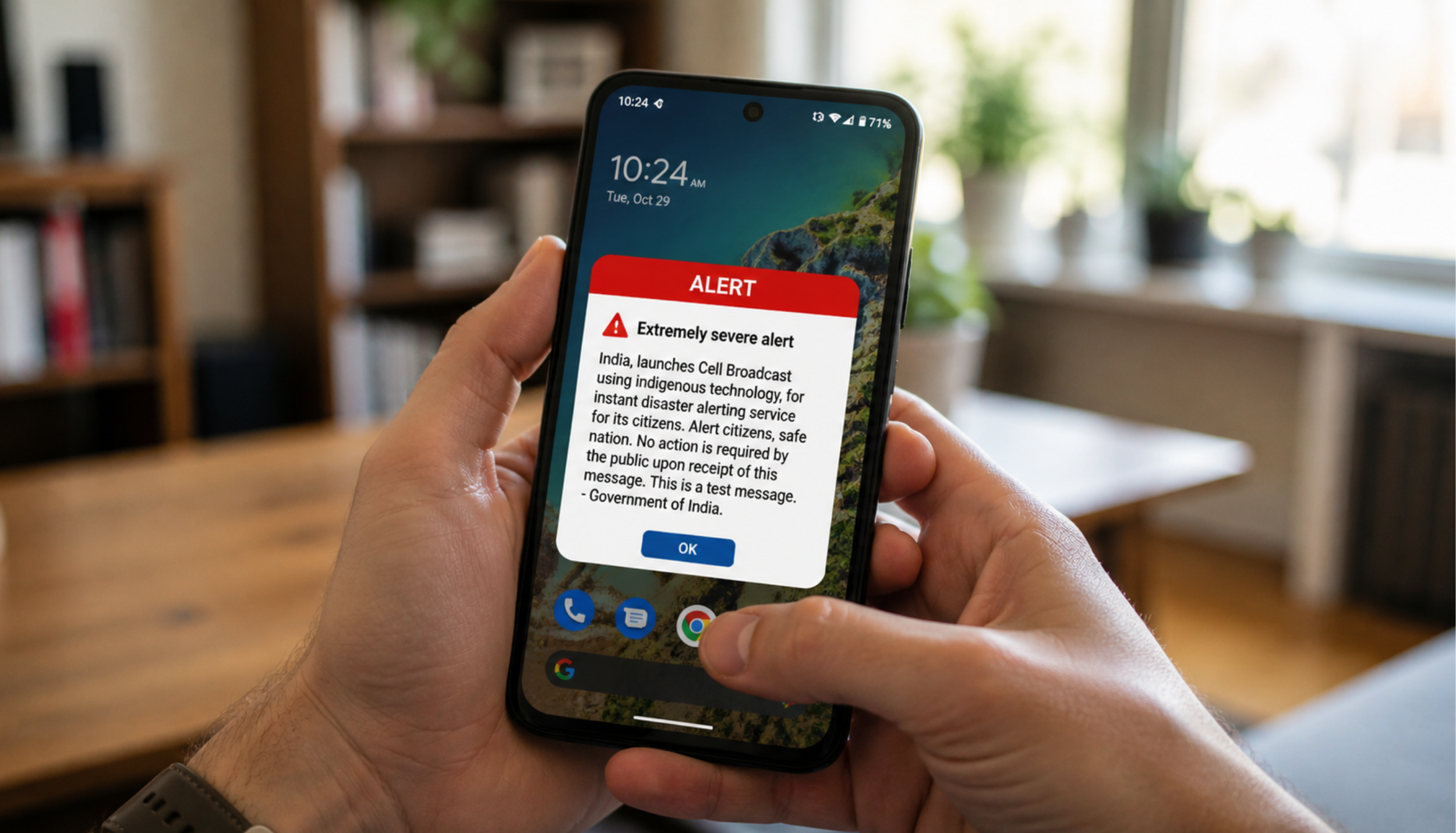
On May 2, mobile phones across India got a special alert message from the government of India. The alert came with:
- Strong vibration
- A pop-up message on the screen
- A very loud beep sound
The message was like, “Extremely severe alert! India launches Cell Broadcast using indigenous technology for instant disaster alerting service for its citizens. No action is required. This is a test message. – Government of India.” This message was sent as part of the nationwide test of a new emergency alert system. Also, the government had already informed people earlier that such alerts may come and asked citizens not to panic.
Extreme Severe Alert Meaning: Should You Be Concerned?
The term “Extremely Severe Alert” sounds scary but in this case, it does not mean that something dangerous is happening. In simple words, It is used for very serious situations like:
- Earthquakes
- Cyclones
- Floods
- Industrial accidents
It is a category of emergency alert. On the other hand, the message that you received was only a test, not a real warning.
Government Alert Message in India: Why You Received It
You received this message because the Indian government is testing a new disaster warning system. This system is being developed by:
- National Disaster Management Authority (NDMA)
- Department of Telecommunications (DoT)
- Ministry of Communications
The primary goal is very simple: to warn people quickly during real emergencies and save lives. The government said, “If you receive an Alert Message on your phone, do not panic. This is part of the testing of the Emergency Alert System, so that accurate information can be received on time during disasters. During testing, this message may appear repeatedly. Ignore it; you do not need to do anything.”
Overall, even if the message appeared several times, it was normal during testing.
How Cell Broadcast Alert in India Actually Works
This is one of the most critical factors that must be understood. Cell broadcast is the technology that allows the government to send a message directly to all mobiles in a particular area. Here is the table that helps you know how it is different from SMS.
| Feature | SMS | Cell Broadcast |
|---|---|---|
| Internet needed | No | No |
| Speed | Slower | Instant |
| Network congestion | Can fail | Works even when network is busy |
| Coverage | Individual numbers | All phones in area |
How it actually works
- The message is received instantly
- No app or internet is required
- Mobile towers send signals to all nearby phones
Key Features of This System
- Works without internet
- Instant delivery
- Location-based alerts
- Works in rural areas
- Not affected by heavy traffic
Behind the System: SACHET and NDMA
SACHET stands for System for Advanced Communication and Holistic Emergency Transmission. In simple words, it is India’s main emergency alert platform. Here are the key pointers about SACHET:
- Supports multiple Indian languages
- Works across all 36 states and union territories
- Uses the global standard Common Alerting Protocol (CAP)
- Developed by C-DOT (Centre for Development of Telematics)
So far, the NDMA alert system has successfully delivered over 134 billion alerts in 19+ Indian Languages, covering disasters such as heavy rainfall, extreme weather events and cyclones.
Advantages of the NDMA Alert System
The Extreme Severe Alert System is made to keep people alert and safe during emergencies. Here are the key benefits:
1. Reaches Everyone in the Area
- The alert is sent to all phones in a specific location.
- Even people in villages or remote areas will receive it.
2. Instant Alerts (Very Fast)
- It helps people react fast during disasters such as floods and earthquakes.
- You receive a message within seconds.
3. No Internet Needed
- The alert works on normal network signals.
- You don’t need mobile data or Wi-Fi.
4. Works Even When the Network is Busy
- During emergencies, calls and messages may fail.
- This system still works accurately.
5. Comes in Different Languages
- More people can understand the alert easily.
- Messages are sent in Indian languages.
6. Location-Based Alerts
- Only People in the affected area get the message.
- It avoids chaos and panic in other places.
7. Help Save Lives and Properly
Early warning means people can:
- Taking precautions can reduce damage and save lives.
- Move to safe places.
8. Covers Many Types of Emergencies
It is not just for the weather. It can warn about:
- Cyclones
- Floods
- Earthquakes
- Gas leaks or industrial misfortunes
Why the Alert Sound Was So Loud and Shocking
If you get the warning again in the future, then follow these steps:
- Step 1: Don’t Panic: Stay calm. Every alert message does not mean risk.
- Step 2: Read the Note Carefully: Check if it says “test” or feeds real information.
- Step 3: Follow Steps(If Real): If it’s a real trouble, then move to a safe place and follow authorized policies.
- Step 4: Don’t Spread Panic: Avoid spreading wrong data.
How India Will Use This Emergency Alert System in the Future
This system is a big step for India’s safety. It will be used for natural disasters like earthquakes, floods, and Cyclones. It will also be used for Weather alerts like heavy rain and storm warnings. Further, it will be used for industrial emergencies like gas leaks and chemical accidents. Now the main question is why this is crucial. The answer to this is that it will help people react early, reduce damage and save lives. Overall, India is building a strong and modern communication system to manage emergencies correctly.
Final Thoughts: Stay Informed Without Panic
Overall, the “Extremely Severe Alert” created a lot of confusion, but now you know the exact truth. It was a test of India’s emergency alert system, which was created to protect people during real disasters. The loud sound is willful for safety and there is no need to panic. So, next time if your phone beeps like this, you will know what you want to do.
FAQs
1. Why did my phone beep loudly today in India?
Ans. Your phone beeped loudly because the government of India was testing its emergency alert system and it was a test message not a real emergency.
2. What does “Extremely Severe Alert” mean on mobile phones?
Ans. “Extreme Severe Alert” is a type of emergency warning used in serious situations such as earthquakes, floods, or cyclones.
