

Last Updated on April 13, 2026 by Khabr Bite
The US-Iran war is still ongoing and on the verge of a major financial and economic turmoil for the entire world. Instead of the anticipated peace talks, Trump has announced a blockade on Hormuz, which could bring major disruptions. Here’s all about Trump’s decision and its impact on India, China, and Europe.
Trump Threatens Iran with Hormuz Blockade: What is Happening?
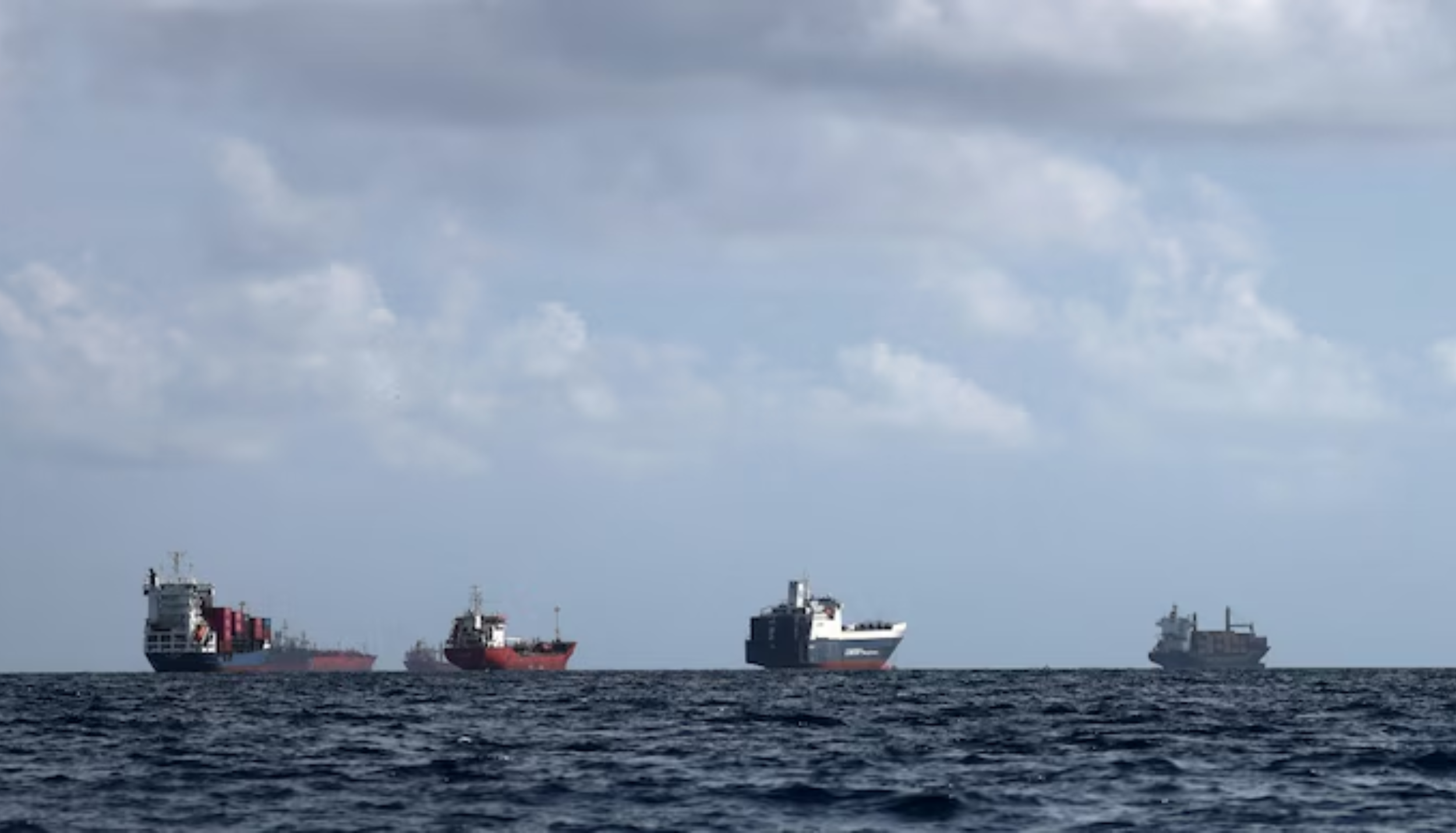
After a failed negotiation in Pakistan between the United States and Iran, President Trump has threatened Iran with a Hormuz blockade. On Sunday, he said that the U.S. Navy would impose a blockade in the Strait of Hormuz, which is a vital shipping waterway for global trade and a financial lifeline for Iran in the war with America.
According to Trump’s social media post, they will take this step effectively, starting Monday at 10 a.m. Eastern Time (7:30 PM IST).
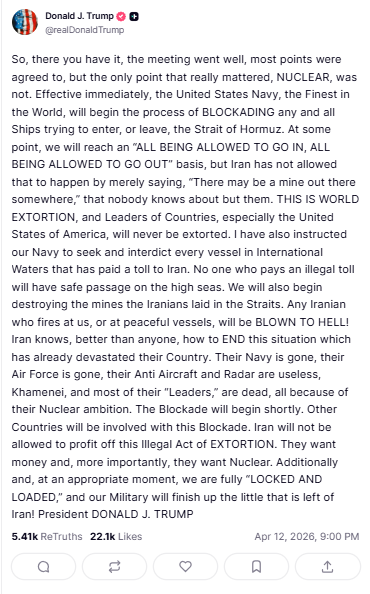
“Effective immediately, the United States Navy, the Finest in the World, will begin the process of BLOCKADING any and all Ships trying to enter, or leave, the Strait of Hormuz.” “At some point, we will reach an ‘ALL BEING ALLOWED TO GO IN, ALL BEING ALLOWED TO GO OUT’ basis.”
Also Read: Legendary Singer Asha Bhosle Dies at 92: Tributes Pour In from Stars and IPL Teams
The current situation represents one of the most significant geopolitical escalations in modern history. While the conflict is between the U.S. and Iran, the global energy market has been disrupted. Even India has faced a slight impact of the war, but that could worsen with the blockade. China and Europe could also bear the impact of this U.S. Navy action.
Impact on Iran
Amid the war, Iran has halted the movement of the ships of allies of the U.S. and Israel from the Strait of Hormuz, while allowing the ships of Tehran’s friends to pass. Now the US has proposed the Hormuz Blockade, which will block the vessels entering or leaving Iranian ports, which would cut Iran’s major source of revenue, that is, oil exports to China.
It is estimated that Beijing accounts for more than 80% of Iran’s oil exports, which is 1.5 to 1.6 million barrels per day. Although it is roughly only 15-16 percent of China’s total crude imports, it is a critical source of revenue for Iran at war.
The disruption of the vessel could limit their ability to export oil and earn revenue, and continue the war. However, this would also impact China, India, and other nations.
Why is India a Primary Victim of Trump’s Hormuz Blockade?
Although it is said that the Hormuz blockade is aimed at vessels leaving or entering Iranian ports, India could face significant consequences. It is not because India would not have access to Iranian oil, since India’s crude imports from this Middle Eastern country have remained negligible since 2019, after US sanctions.
Only during the US-Iran war, India received its first Iranian crude cargo in seven years, so the impact would not come from here. Instead, it will come from the other Gulf producers like Iraq, Saudi Arabia, and the United Arab Emirates, from which India imports, and the shipments move through the same route, the Strait of Hormuz.
Notably, Iran has allowed the India-bound cargoes to transit the strait despite the tension; there’s no certainty that it will continue, considering the U.S. move of a proposed naval blockade.
Oil Cost Shock
As already mentioned, nearly half of India’s crude imports pass through the Strait of Hormuz. Even without a full shutdown, it is facing freight rate rises, insurance costs spikes, delayed delivery timelines, and more.
With Trump’s blockade decision, it could push the cost of crude, inflation, and the fiscal burden.
LPG and LNG Crisis
Reports from India today reveal that the nation imports roughly 60% of its liquefied petroleum gas requirements from the Gulf countries. India is already facing LPG issues with hiked prices, delayed deliveries, and a lack of cylinders at locations, and even the government has invoked the Essential Commodities Act to ration supplies.
Speaking of LNG, Delhi imports nearly 50% of that from Qatar, and with the blockade, the shipments will get paralyzed, impacting power generation, fertiliser production, and city gas distribution in the country.
Inflation, tighter financial conditions, and the safety of over 20,000 Indian seafarers in the conflict zone are also at risk.
Impact on China and Europe
The disruption in the Strait of Hormuz could heavily impact China. Its industrial machine heavily depends on Iranian oil, and there’s no immediate alternative to that. Although Iran is actively exporting oil to Beijing even amid war, the U.S. blockade will force China to choose between its energy needs and a direct naval confrontation with the U.S.
Also, Chinese exports to Europe would get disrupted, as they will have to reroute around the Cape of Good Hope. This would add 10–14 days of extra transit times and rising logistics costs by over 50%.
Europe, on the other hand, is facing its second energy shock, right after barely recovering from the Russian gas halt. Reportedly, Europe relies on Qatari LNG, which is disrupted due to the closure of the Strait of Hormuz. It is now competing for the U.S. or African gas in a super-competitive market, which is driving its inflation to sky-high levels.
Also Read: Oppo Find X9 Ultra India Launch Announced for April 21: Here’s What to Expect
Even the European Central Bank (ECB) has been forced to postpone interest rate cuts and raise inflation forecasts. It is said to be pushing Germany toward a technical recession.
The impact is also visible in the industries, since the high energy cost to make European steel, chemicals, and automotive manufacturing is not bearable.
Global Impact of Recent US-Iran Activities
With Donald Trump’s announcement of a naval blockade of Iran, the oil prices have increased sharply. According to Al Jazeera reports, Brent crude, the international benchmark, rose more than 8% on Monday morning to top $103 a barrel. Notably, the oil prices have been a rollercoaster since the US-Israeli joint strikes on Iran.
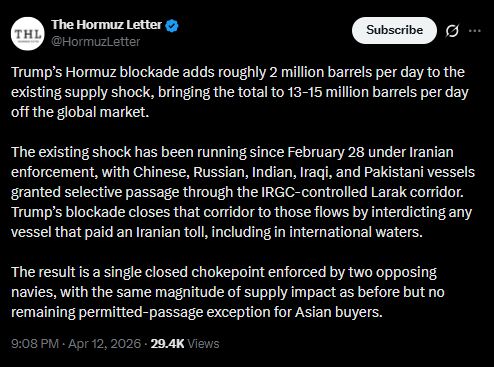
Also, the major stock markets in Asia felt the tremors of Trump’s announcement, as they turned lower on Monday, signaling uncertainty on trading floors.
