

Last Updated on April 25, 2026 by Khabr Bite
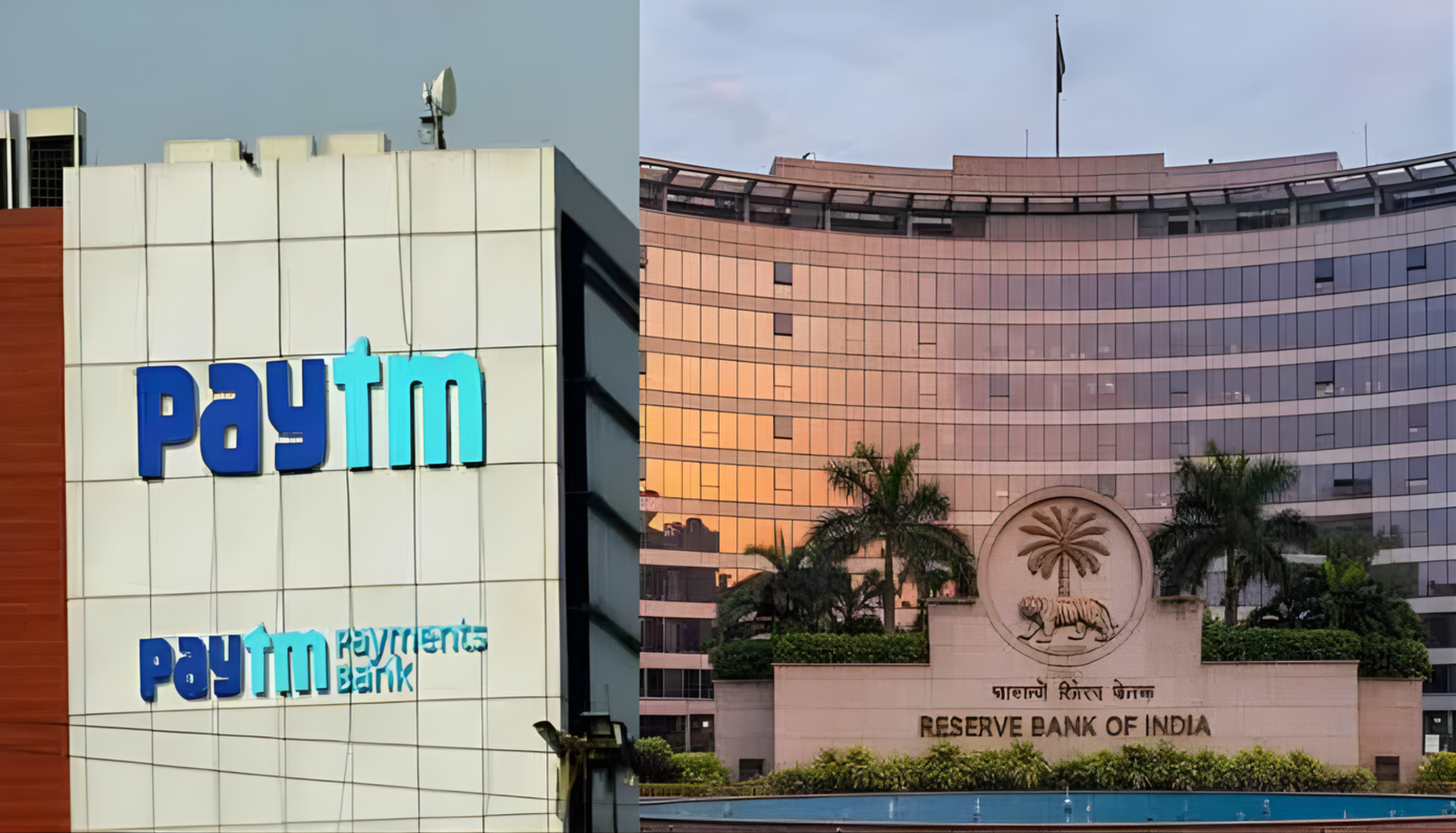
The news about the Paytm Payments Bank licence cancellation has created confusion among millions of users in India. Many of the users are wondering whether Paytm will stop working completely. But the reality is entirely different. According to the reports from NDTV, the Reserve Bank of India (RBI) has taken strict action only against the Paytm Payments Bank, not the complete Paytm platform.
It simply means that the firm is still operational but its banking services are restricted. The action is because of regulatory and compliance concerns found in the bank’s operation. RBI has also asked the bank to stop various activities, mainly related to deposits and new transactions. The primary goal of RBI is to protect customer interests and ensure that the financial institutions follow accurate rules.
Is Paytm Actually Shutting Down or Not?
The answer to this question is no, Paytm is not shutting down. As per the reports, RBI has taken action against Paytm Payments Bank only and it does not impact the whole Paytm app. In simple words, users can use the app, as they used to do before, like make payments and use other services.
According to Livemint, the central bank said that the actions are taken because of the regulatory and compliance issues found in the bank’s operation. However, the license was canceled on Friday, 24 April, 2026. Also, the RBI said that Paytm Payments Bank has enough to repay its entire deposit liability.
“The general character of the management of the bank is prejudicial to the interest of depositors as also the public interest… no useful purpose or public interest would be served by allowing the bank to continue…,” said the RBI in a statement.
Also Read: PhonePe Crosses INR 1,050 crore UPI Transactions in March 2026: Full Market Share Breakdown
The entire statement was “The Reserve Bank of India (RBI) has, vide order dated April 24, 2026, cancelled the banking licence issued to Paytm Payments Bank Limited under Section 22(4) of the Banking Regulation Act, 1949 (BR Act), effective from close of business on April 24, 2026.
“Consequently, Paytm Payments Bank Limited is prohibited from conducting the business of ‘banking’ as defined in Section 5(b) or any additional business specified under Section 6 of the Banking Regulation Act, 1949, with immediate effect. RBI will make an application for winding up the bank before the High Court.”
How This Affects You as a Paytm User
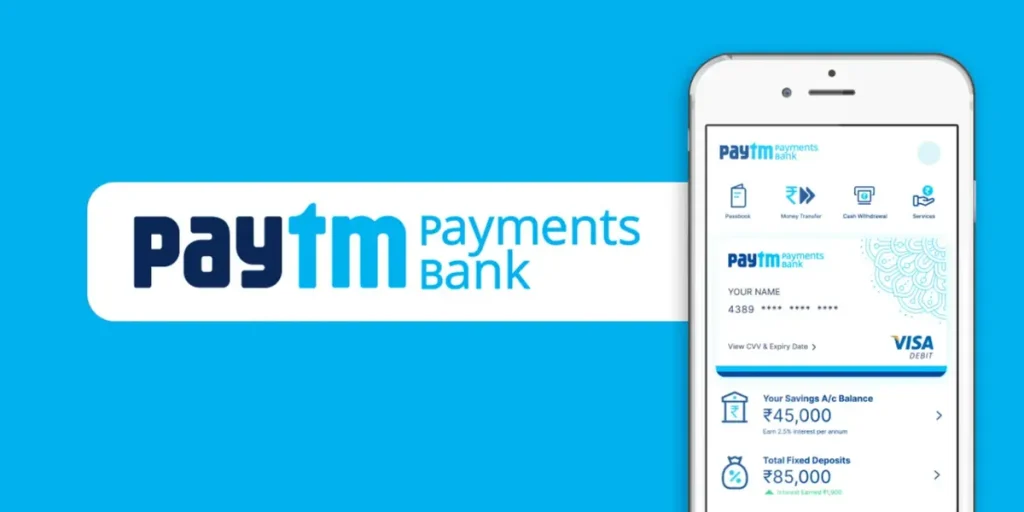
The impact on users depends on how they use the app. According to reports, various services are working normally, mainly those that are not directly linked with the Paytm Payments Bank. Let’s understand it with an example: UPI payments will work if they are linked to other banks such as HDFC, SBI, or others.
QR code payments at shops, bill payments and mobile recharge are also not affected. The services impacted include Paytm Payments Bank accounts, wallet linked to the bank, and the FASTag issued by the Paytm Bank. Suppose someone has money in their Paytm Payments Bank account; they may face issues in using it like before.
In simple words, daily payments are not affected much but banking-related services will see a major shift. So, you must check how your Paytm account is set up to understand your exact situation.
What Happens to Your Money Now?
The biggest question in users’ minds is the safety of their money. So, the answer to the question is given by the RBI; they said, user funds are safe and protected. RBI has not blocked access to money, which means users can simply withdraw or transfer their funds.
But new deposits into Paytm Payments Bank are restricted. The aim of RBI is not to take away users’ money but to ensure accurate compliance by the bank. So, users do not panic, but act wisely. For example, if you have your money in your Paytm Wallet or bank account, you should move it to a regular account such as the SBI, ICICI or more.
What Lies Ahead for Paytm as a Company?
Paytm still has a bright future, but it needs to make some crucial decisions. As per the reports, the firm is likely to shift its aim away from its own banking system and work with partner banks. It simply means Paytm may collaborate with several other brands to continue services such as Payments and UPI.
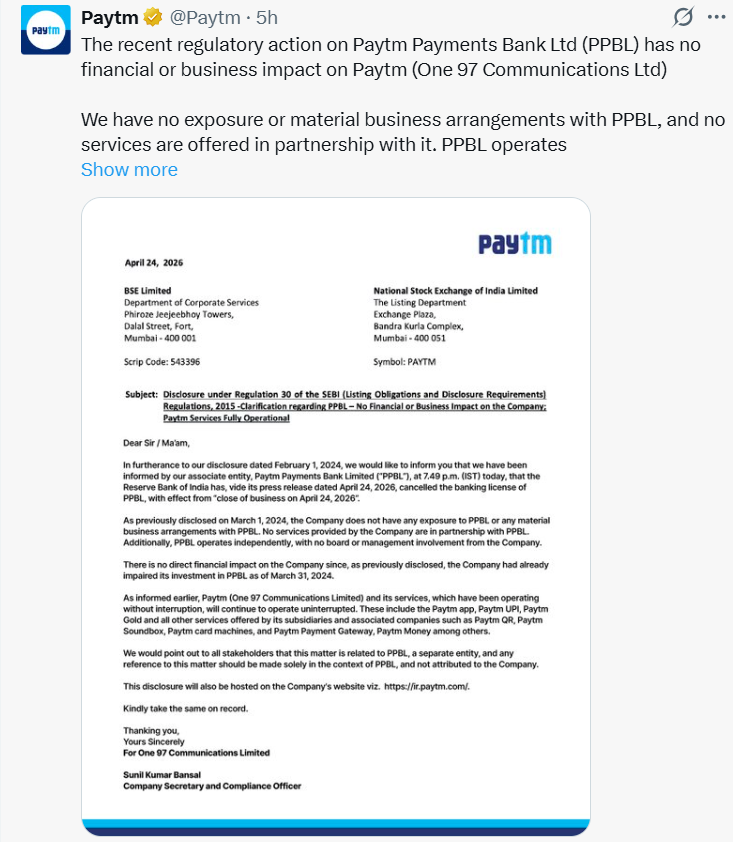
As per NDTV, Paytm’s parent company, One 97 Communication Ltd, in an exchange filing said, “Paytm does not have any exposure to PPBL or any material business arrangements with PPBL. No services provided by the Company are in partnership with PPBL…”
“Additionally, PPBL operates independently, with no board or management involvement from the Company. There is no direct financial impact on the Company since, as previously disclosed, the Company had already impaired its investment in PPBL as of March 31, 2024.
“As informed earlier, Paytm (One 97 Communications Limited) and its services, which have been operating without interruption, will continue to operate uninterrupted. These include the Paytm app, Paytm UPI, Paytm Gold and all other services offered by its subsidiaries and associated companies, such as Paytm QR, Paytm Soundbox, Paytm card machines, and Paytm Payment Gateway, Paytm Money, among others.”
In simple words, if the company adapts quickly and follows rules accurately, it can again grow in the future. So the current scenario is tough, but it is not the end for Paytm.
Also Read: POCO C81 Series India Launch: ₹9,999 Phone That Could Change the Budget Game
The Real Reason Behind RBI’s Strict Action
This is not the first time that Paytm has faced any issues. Previously, the bank was directed by the RBI to stop getting new customers from March 11, 2022. But now, here are the main reasons why the Reserve Bank cancelled the license of the Paytm Payments Bank:
As per Money Control, the RBI said 5 reasons in their statement:
“(1) The affairs of the bank were conducted in a manner detrimental to the interest of the bank and its depositors. Thus, the bank is not complying with Section 22 (3) (b) of the BR Act.
“(2) The general character of the management of the bank is prejudicial to the interest of depositors, as also the public interest. Thus, the bank is not complying with provisions of Section 22 (3) (c) of the BR Act.
“(3) No useful purpose or public interest would be served by allowing the bank to continue as envisaged in Section 22 (3) (e) of the BR Act.
“(4)The bank failed to comply with the conditions stipulated in the Payments Bank license issued to it, thereby violating the provisions of Section 22 (3)(g) of the BR Act.”
Ripple Effect on Fintech Industry & Competitors
| Platform / Area | Situation After RBI Action | Impact Level | Key Insight |
|---|---|---|---|
| Paytm | Banking licence cancelled, Payments Bank operations stopped | High Negative | RBI may initiate winding-up process of the bank |
| PhonePe | No regulatory issue, continues operations normally | Positive | Already holds ~48% UPI market share, strong growth expected |
| Google Pay | No restrictions, stable platform | Positive | Around 37% UPI share, benefits from user shift |
| Navi | Growing fintech platform, no issue from RBI | Positive (Opportunity) | Small share (~3.5%), but can grow if users shift |
Overall, Paytm faces a major setback, while PhonePe and Google Pay strengthen their dominance in this market. Also, small players like Navi can get growth chances and stricter RBI rules will reshape the entire fintech industry.
