

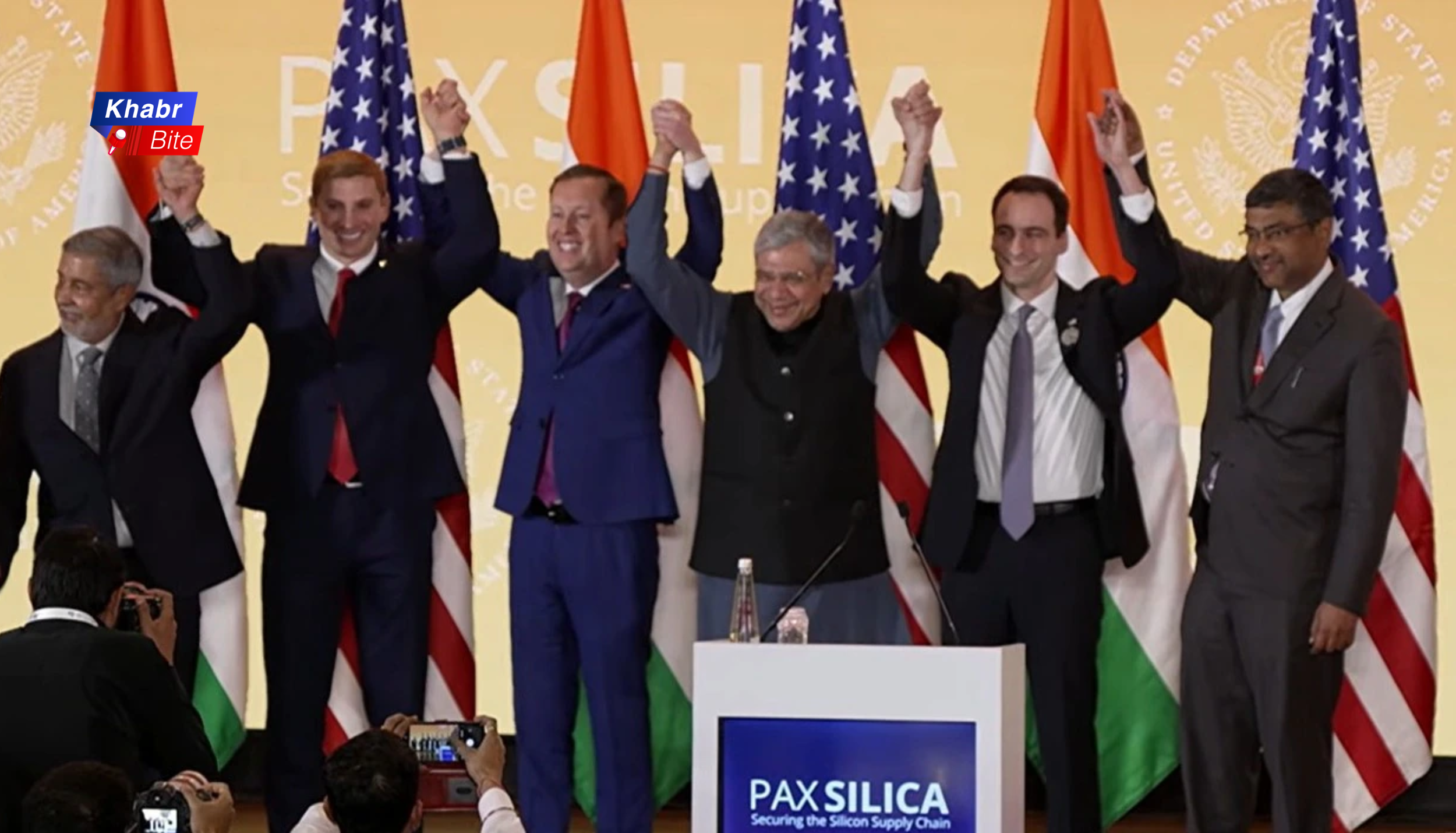
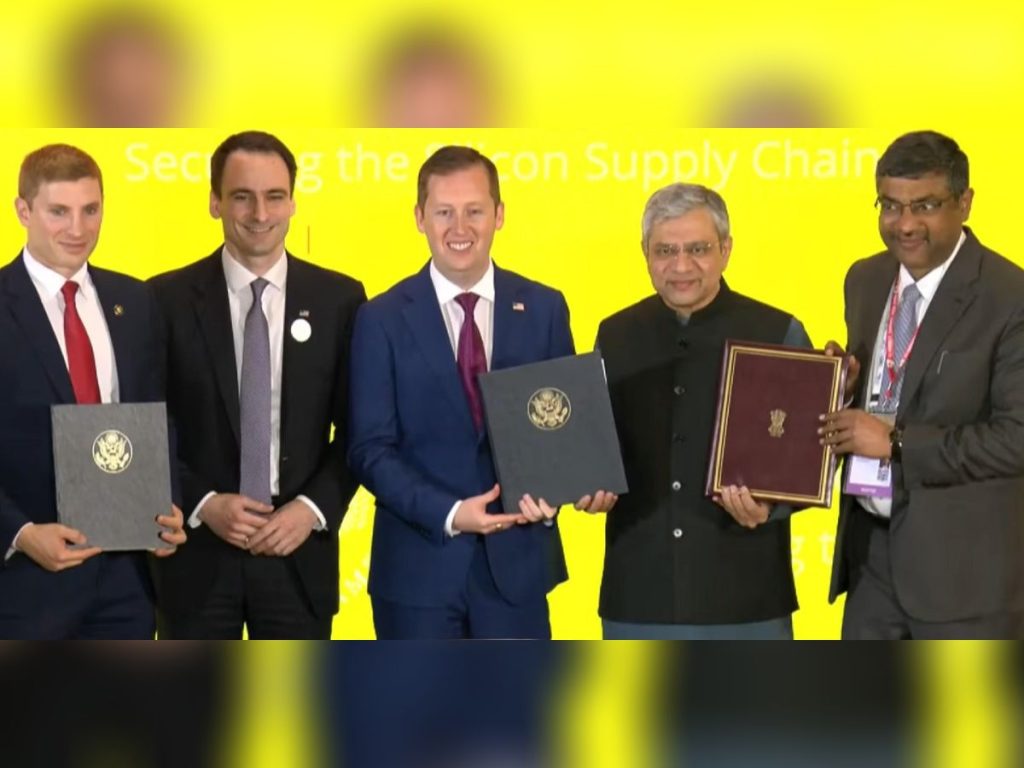
India signed the Pax Silica declaration with the United States, marking a critical moment in global technology cooperation. This signing occurred at the India AI Impact Summit 2026 in New Delhi, where Indian Officials and US representatives came together to launch this strategic partnership. During the event, Ashwini Vaishnaw, Union Minister for Electronics and Information Technology, pointed out India’s growing technological strength. Just after the signing, he said: “Today, our talented engineers are designing the most complex, most advanced 2-nanometer chips here in India. … A complete ecosystem is emerging in India, and for that, Pax Silica will be of great importance and will benefit the youth of India.”
He also markets that the initiative will help India’s growing semiconductor and electronics sector by building a robust supply chain and creating opportunities for Indian engineers and young professionals.
On the other side, Jacob Helberg, the US Under Secretary of State for Economic Affairs, explained the broader vision of the initiative, stating: “Pax Silica is a declaration that the future belongs to those who build, and when free people join forces … we say no to weaponised dependency and no to blackmail.”
In addition, US Ambassador to India Sergio Gor called the pact:
“A coalition of capabilities that replaces coercive dependencies with a positive-sum alliance of trusted industrial bases.”
It simply means that both countries see Pax Silica not just as a deal, but as a long-term strategic partnership.
Also Read: India Attends Trump’s Gaza Board of Peace Meeting as Observer, Not a Member
What Is Pax Silica?
Pax Silia is a tech and trade partnership led by the United States focused on semiconductors, artificial intelligence, critical minerals, and secure supply chains. It brings like-minded countries together to enhance tech production and lessen global risks in key industries. The name itself is telling. “Pax” is Latin for peace and prosperity. On the other hand, “Silica” refers to silicon dioxide, the raw precursor to the semiconductor chip that makes modern computing possible.
Why India’s Entry Matters
India’s entry into Pax Silica marks a crucial step in enhancing its global technology position. The move not only deepens ties with the United States but also supports India’s long-term goals in semiconductors, AI, and strategic trade security.
1. Strengthening Tech Cooperation
India has officially joined Pax Silica, strengthening collaboration with the United States in chip design, artificial intelligence, advanced manufacturing, and research. It deepens strategic tech ties and draft opportunities for shared innovation between major economies.
2. Securing Supply Chains
India’s entry enhances the diversification of semiconductors and important mineral supply routes. In addition, by joining the impact, India gains access to trusted technology networks and lessens vulnerability to global disruptions to enhance long-term stability for electronics and manufacturing sectors.
3. Reducing Dependence on China
After signing the deal, India supports efforts to lessen reliance on China for semiconductors and tech elements. Participating in Pax Silica boosts alternative manufacturing sources, fostering strategic industries critical for economic growth.
4. Boosting Domestic Tech and Jobs
India’s addition is expected to grab more semiconductor investments, research facilities, and high-tech projects. It will help in creating more jobs and fostering local abilities. The impact links with national goals to expand electronics manufacturing and boost skilled employment.
Also Read: US-Iran Tensions Explained: 5 Reasons Why a Possible Attack Could Happen Soon
What Changes After This Deal?
After marking the deal on 20th February 2026, India can expect more US tech investment, joint research endeavors, and policy coordination on vital technology supply chains. However, the pact may accelerate domestic semiconductor capacity and improve India’s role in global tech markets.