

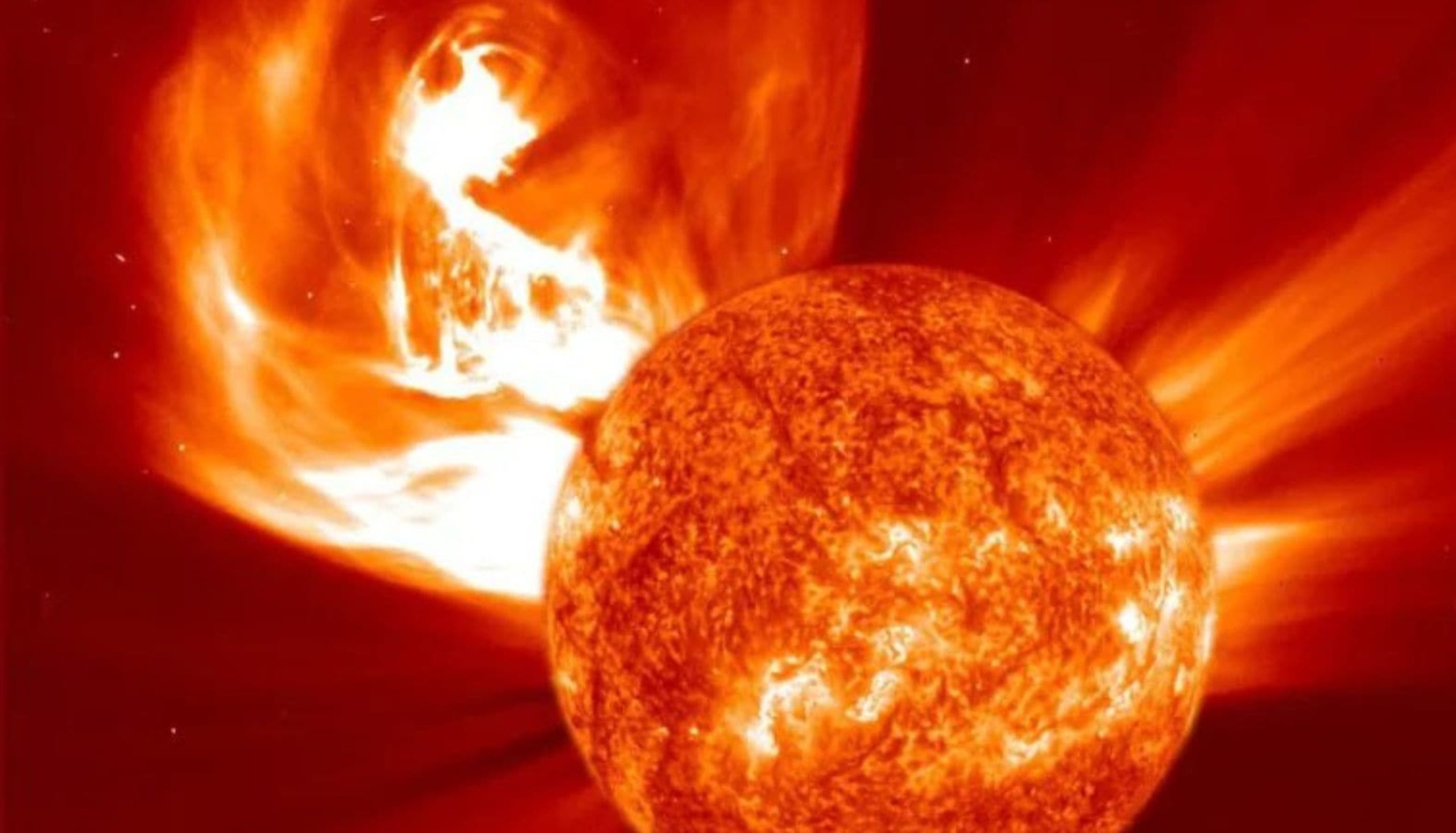
Scientists have reported that the strongest solar radiation storms of more than 20 years have hit the Earth. According to the reports, a rare and intense energy flare from the Sun has entered Earth, causing the radiation storm. While the experts remain on the alert, the event has created a spectacular display of northern lights in the area where it has never happened before.
SWPC NOAA Confirms Severe S4 Solar Radiation Storm Striking Earth
In January 2026, Earth was struck by the strongest solar radiation storm since October 2003. Notably, a similar intense radiation event also took place in May 2024, but it reached the highest level in 22 years this month. The Space Weather Prediction Centre (SWPC) of the National Weather Service has confirmed the severe S4 solar level storm (out of the 5 scale levels).
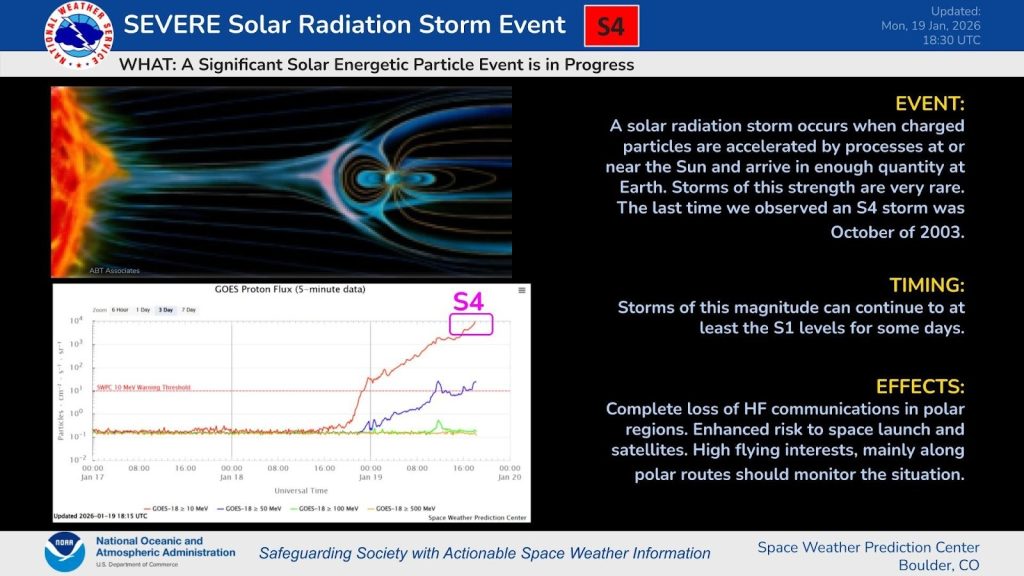
The S-4 level storm is a rare occurrence and occurs during periods of high solar activity near the peak of the Sun’s 11-year cycle.
Key Metrics: –
- Radiation Level: Rated S4 (Severe) on the NOAA Space Weather Scale (S1–S5).
- Geomagnetic Level: Reached G4 (Severe). Sometimes touching G5 (Extreme).
- Particle Speed: Solar wind speeds peaked at over 1,100 km/s (4x the typical speed)
Why Do Such Solar Radiation Storms Form?
The release of the intense energy particles from the sun and their rapid travel through space lead to the creation of such solar radiation storms. This specific January storm was triggered by an X-class solar flare (intense category) and a subsequent Coronal Mass Ejection (CME).
It’s different from the typical geomagnetic storms that take days to arrive. Experts note that high-energy protons in such radiation storms travel at the fractions of the speed of light, reaching Earth in under an hour.
Also Read: Donald Trump Shares Controversial Map Claiming Canada, Venezuela, and Greenland as U.S. Territory
Severe S4 Solar Radiation Threats Satellites and Flights Not Humans
Scientists are on alert due to this S4 storm, not for the people but for the satellite and flights. People on the ground are protected by the atmosphere, but the high altitude and orbital infrastructure are at risk.
The storm heated the upper atmosphere, causing it to expand. The atmospheric drag slows down the Low Earth Orbit (LEO) satellites, creating the need to use the fuel to maintain their orbits.
Even the flights at high altitude could face communication problems, and the crew and people would have an increased risk of radiation (within safe limits, but more serious than usual).
In the northern regions, the pilots faced disruption in the High Frequency (HF) stations due to ionospheric interference, causing communication blackouts.
Satellite operators are also keeping an eye on systems since they can face possible signal degradation or even minor hardware stress.
Steps Taken to Battle This Storm
NASA and private operators like SpaceX have placed their satellites into safe mode to prevent Single-Event Upsets (SEUs). In SEUs, high-energy particles flip bits in computer memory.
The United and Lufthansa airlines have rerouted their flights from polar regions to lower altitudes. The Earth’s magnetic field lines are open at the poles, allowing radiation to penetrate deeper into the atmosphere.
Even astronauts stationed at the International Space Station (ISS) have been instructed to shelter at the shielded modules, like the Zvezda service module, to minimize exposure to solar protons.
The Beautiful Auroras Fill the Sky Amid Solar Radiation Storm
While the solar radiation storm poses a risk, it’s also filling up the night sky with beautiful auroras. Europe saw dazzling lights even in the farther southern regions, including France, Germany, and Italy.
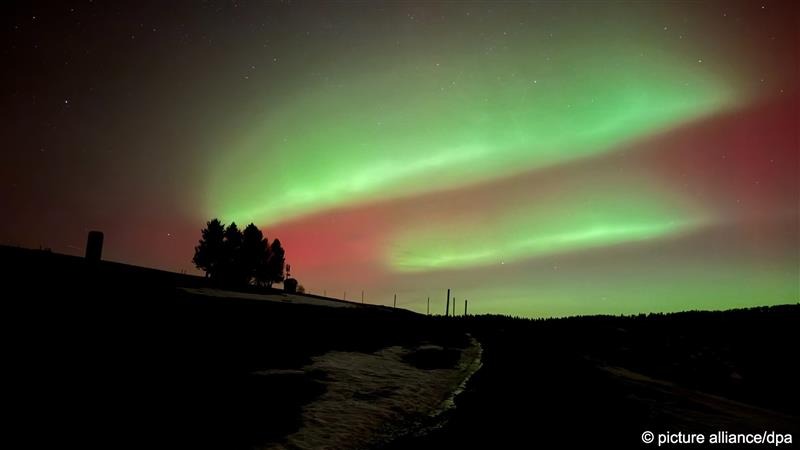
The photographers also captured Northern lights in American states like California, Alabama, and Georgia, far below their typical Arctic range.
How Long Will the Storm Last?
The S4 solar radiation has been going on for a few days now and is likely to continue for a couple of days. However, the duration could fluctuate significantly due to the development stages of the storm.
Stay connected for further updates and continuous alerts on the storm.