

Ahead of the 2026 Republic Day celebration, Jairam Ramesh has shared a poignant look back at the rare details of the birth of the Indian Republic. In a Saturday, January 24, 2026, post, he recalled the signing of the Constitution of India by 264 members of the Constituent Assembly, exactly 76 years ago, January 24, 1950.
Jairam Ramesh Recalls the Final Signing of India’s Constitution
The senior Congress leader Jairam Ramesh recalled the 76th anniversary of the final signing of the Constitution on January 24, 1950. He posted an X post and provided significant details around the document, starting with its earlier adoption on November 26, 1949, and formal signing by 264 members of the Constituent Assembly, two months later, making it a charter for socio-economic transformation.
“76 years ago today, 264 members of the Constituent Assembly formally affixed their signatures to the Constitution of India that they had earlier adopted on Nov 26, 1949.”
The Three Original Copies of the Constitution
Jairam Ramesh stated that the Assembly signed three distinct versions of the Constitution for its preservation and ensuring its accessibility for the upcoming generations.
Out of these three original copies of the Constitution, two were handwritten versions. One meticulously penned in English and the other in Hindi. The third is the printed English edition, used for wider circulation.
Also Read: India Squad for T20 World Cup 2026: Full Player List, Captain, and Analysis
Masterful Art, Illustration, and Calligraphy
In the same post, he highlighted the deep craftsmanship and the historical weight behind the document. He emphasised that these copies were not just legal texts, but they were masterpieces of Indian heritage.
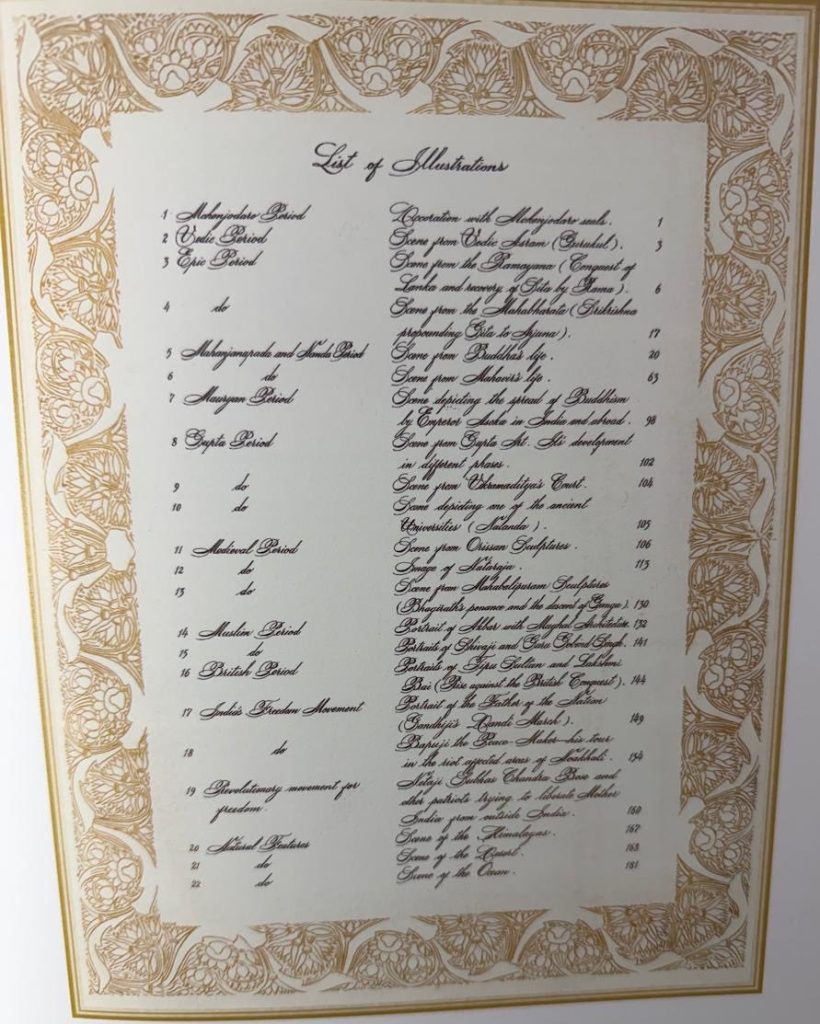
Jairam Ramesh stated that Nandalal Bose and his team of artists from Shantiniketan created 22 detailed illustrations.
“They signed three copies – two of which were handwritten in English and Hindi and carried 22 illustrations by artists from Shantiniketan, led by none other than Nandalal Bose himself.”
He also talked about the beautiful calligraphy of the documents. In English, it was done by Prem Behari Narayan Raizada, and in Hindi by Vasant K. Vaidhya.
“The beautiful calligraphy in English was by Prem Behari Narayan Raizada, and in Hindi it was by Vasant K. Vaidya. “
Even the first page carries significant importance and detailing, the national symbol designed by Dinanath Bhargava. He revealed that Dinanath Bhargava spent many months visiting the Kolkata Zoo (at Nandalal Bose’s insistence), studying the anatomy and posture of live lions to ensure the lions in the emblem completely resemble the real ones.
Also Read: Amazon Prepares for Major Layoff Round, Up to 16,000 Jobs at Risk
Ramesh describes the artistic value of these illustration copies, which has a role beyond being constitutional.
“Quite apart from the fact that it is a charter for profound socio-economic transformation, the Lalit Kala Akademi set up in Aug 1954 has described the illustrated Constitution as ‘a seminal art treatise that navigates India’s multi-layered history … and celebrates the threads of unity in diversity…”
Also Read: Republic Day Parade 2026: How to Buy Tickets Online and Offline, Price and More
Jairam Ramesh Brought Up The Moment Frozen in Time
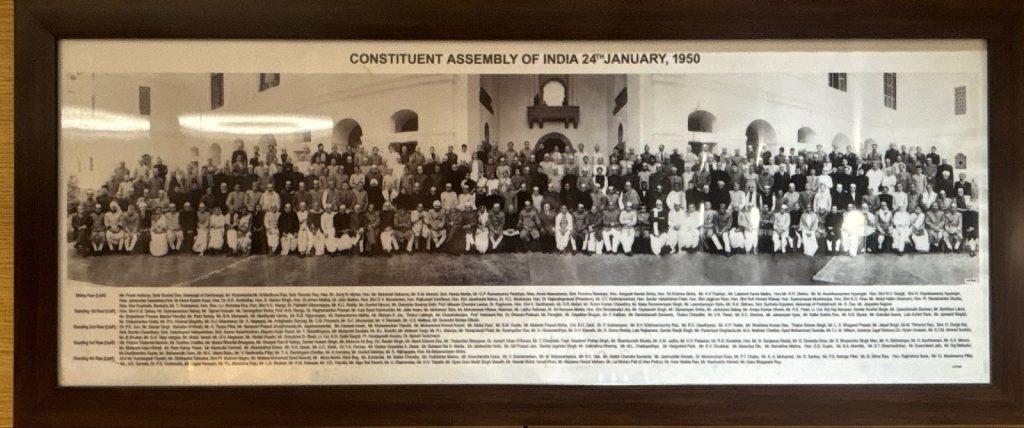
At the end of his post, he recalled the moment when members sat together as a group. He described these images as “one for the ages.”
“That very day, the members sat together for a group photograph. It is one for the ages.”