

Last Updated on January 29, 2026 by Khabr Bite
On January 29, 2026, the Supreme Court of India paused the implementation of the UGC (Promotion of Equity in Higher Education Institutions) Regulations, 2026. The bench, led by Chief Justice Surya Kant and Justice Joymalya Bagchi, issued notice to the Centre and UGC, which redefined caste-based discrimination, that these rules could lead to social fragmentation and a regressive education system.
Per the court orders, the previous 2012 Regulations remain in force until the 2026 framework is revisited. The new framework is alleged to be discriminatory against the general or upper caste as it extends the benefit of reservation to only the Scheduled Castes (SC), the Scheduled Tribes (ST), and members of the Other Backward Communities (OBC).
Supreme Court’s Key Quotes on UGC Rules
While addressing the issue and pleas challenging the regulations, the Supreme Court shared various remarks. The important quotes from the January 29 are: –
- “Hope we don’t segregate schools like the US… India’s unity must reflect in its educational institutions.”
- “Are we becoming a regressive society? After 75 years of the Constitution, we should be moving toward a casteless society, not creating silos within campuses.”
- “Then you have spoken about separate hostels. For god’s sake! There are inter-caste marriages also now in our society. And we have also been in hostels where we all stayed together. “
- “How will people grow outside campus if we have such an environment inside campus? Schools and colleges cannot function in isolation from the goal of social integration.
- “Prima facie, the language of the regulations is vague and capable of misuse… it could have a very dangerous impact and lead to sweeping consequences.”
Also Read: Ajit Pawar Dies in Plane Crash Near Baramati, Five Killed
What is the UGC Rule?
The UGC (Promotion of Equity in Higher Education Institutions) Regulations, 2026 was introduced recently to replace the older 2012 guidelines. The motive behind this framework is to create a “casteless and inclusive” campus environment for students.
Under this rule, a mandatory Equity Committee and Equal Opportunity Centres (EOC) must be set in every college and university. It also introduced Equity Squads, which will monitor the vulnerable spots on campus to prevent discrimination against SC, ST, and OBC students.
Notably, for the first OBC is brought under the same anti-discrimination protection as SC and ST.
Why are Protests Erupting Against the UGC Rule?
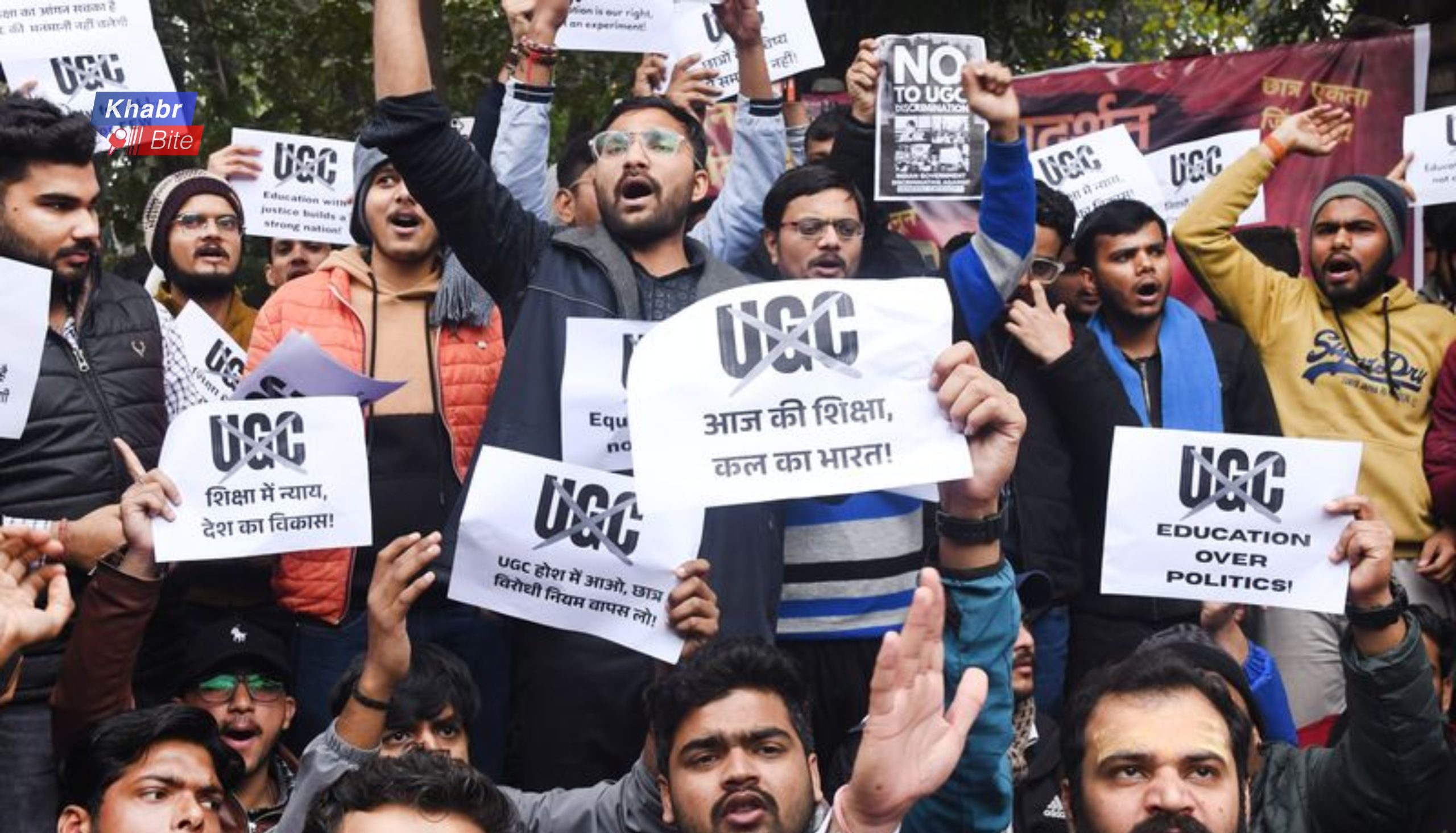
General Category students and some faculty members have been protesting against the UGC rule ever since it was introduced.
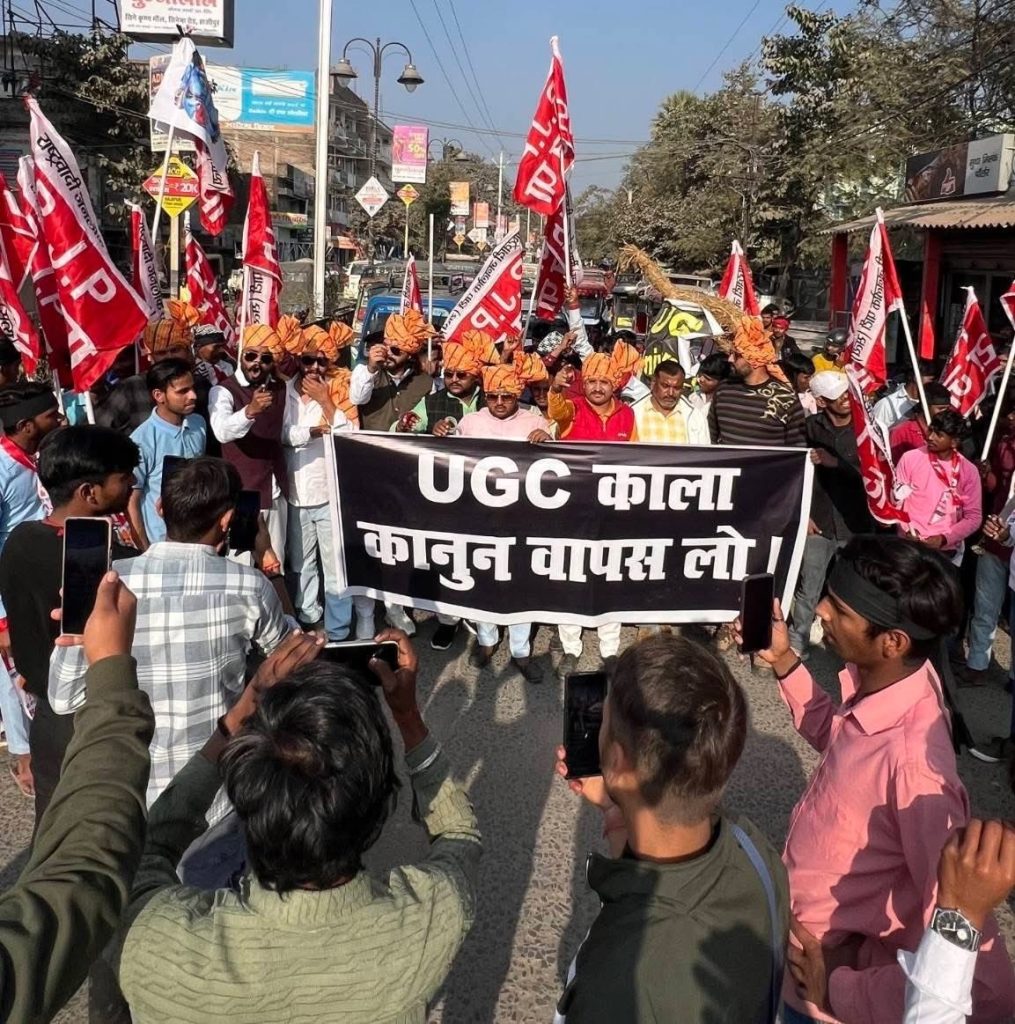
There are several reasons behind these protests: –
- The UGC rule excludes the General category, resulting in critics and General students calling it discrimination against them. More importantly, the students plead that they have no equivalent recourse to the harassment or ragging they might face from these reserve-category peers.
- A very concerning point for protestors is that these regulations do not include any penalties for false or malicious complaints. A person can use these rules as a weapon to settle personal or political conflicts on campus.
- Another reason behind the protests is that the UGC rule mandates the establishment of Equity Committees consisting of members from SC, ST, OBC, women, but it excludes the General category. This makes the panels one-sided.
- Students also fear social division among peers, as caste discussion and segregation might ruin the campus environment.
What will now Happen After the Supreme Court’s Take on the UGC Rule?
The Supreme Court has put the UGC rule on hold and has asked for the rewriting of the rules to include protections for all students, regardless of caste. Until then, the Universities are required to follow the 2012 regulations, and they are not required to form any new 2026 Equity Committees yet.
Also Read: Is Arijit Singh Really Retiring? Singer Explains Why He’s Stepping Away From Playback
A detailed hearing on March 19, 2026, is also scheduled, which would bring far more clarity on the decision. The CJI’s quote, “Hope we don’t segregate schools like the US,” became a major highlight. Students were seen overjoyed with this decision and are expecting better results post this decision.
One student said, “This is a victory for the students.” Another added, “This Supreme Court decision has had a very positive impact on us students. Those who wanted to create division among us, the Court, by putting a stay on it, have done very good work in our interest. We thank the Supreme Court. “
